It should have been easy to put together her story.
She’s so close! Not only in time – what is a hundred years? – but also in space: I actually met someone who knew some of her closest friends. I found her nephew’s family. It’s only a one generation gap, really. One generation – and one world war, one Holocaust, and one burning down of the entire city where everything she had and cared for used to be.
She also plays games with us. She has this incredible talent for being maximally elusive. Death certificates of her and her family? They turn out to be forged (I will explain one day). The list of graduates of her high school? She’s not even listed there, even though I held her graduation diploma in my own hands. The prewar registration lists of residents of Warsaw? The one street missing from the scanned documents is the one she lived on. The pattern repeats itself. And while I suppose that everyone on a history mission shares similar frustrations, each of these things feels personal, almost as done on purpose.
It’s as if she wants to only live in those papers she wrote. That was, after all, all that she wanted to do: philosophy.
What we know:
She was born in Warsaw in 1899. Went to university in 1919 and graduated with a PhD in philosophy seven years later. Her thesis was on the justification of induction. Afterwards, she wrote a lot about probability and induction. She went to all of the Unity of Science congresses and spent some time in Cambridge and Vienna. In September 1939 she fled Warsaw and spent the next three years in Vilnius, Lithuania, until her arrest and subsequent execution in 1942 or early 1943.
What we don’t know:
Her eye color. Her favorite book. Not even her favorite philosopher.
If, when she got that A+ in logic and psychology on her high school diploma, she already knew that this was what she was going to study for the rest of her life.
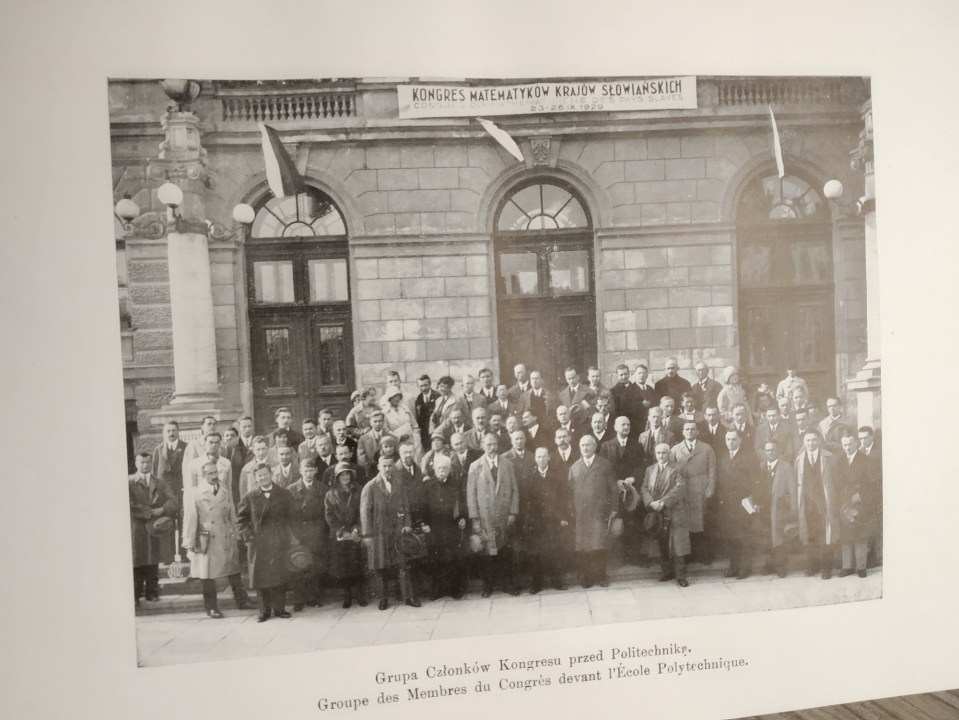
If she is on this photo:
When in 1922 some students were violently demanding fewer Jews to be allowed at the university and she was “too worried to work,” in the words of one of her friends, what was she thinking? Did it ever cross her mind to leave?
What it was like to go from Warsaw to Cambridge and all of a sudden not be allowed in seminars and libraries as a woman.
If she also smelled of No. 5 after her father moved from textiles to cosmetics and started selling Chanel perfumes to Warsaw ladies.
How come this serious woman so devoted to her studies ended up marrying the biggest party boy of the logic group.
What was her idea of success? Of happiness?
 Marta Sznajder