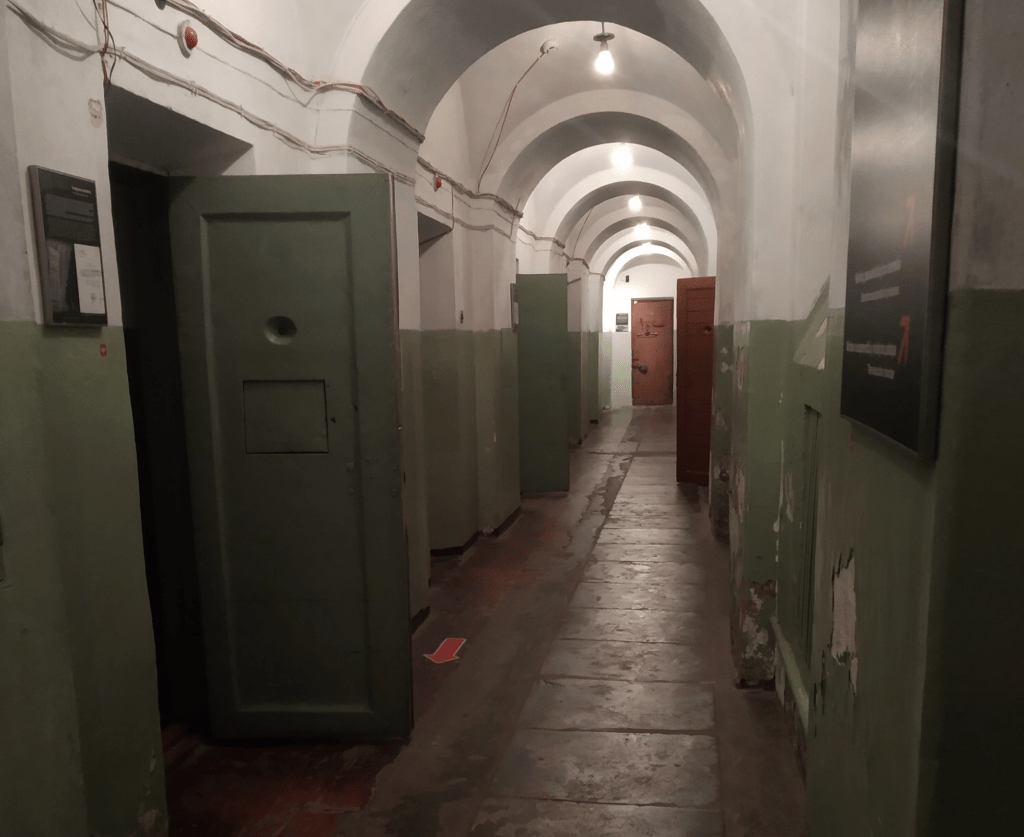
The existing publications on Janina Hosiasson never mentioned a specific date of death. The most common time frame mentioned was April 1942, or simply the spring of 1942. But I was unable to find the original source of this belief: as it often happens with such publications, authors repeat what they saw elsewhere, often without citation, or rely on their own memory of events from decades ago.
Since the spring 1942 date was appearing in articles written shortly after the war, I figured there must have been some truth to it, since at that time people’s memory was still fresh. But still no direct source. And the more I learned about the realities of life and imprisonment in Vilnius at the beginning of the German occupation, the more that spring bracket did not make sense. Janina was a Jew, and at that time no Jew could count on being in prison for more than a couple of months, if that – they were all quickly killed. So if she was arrested no later than September 1941 (another of those often repeated dates), she would not survive until spring.
And then, last September, I finally made my way to what had to be The Source: a database of all of the names of prisoners of the Lukiškės Prison during the war, held at the Lithuanian National Archive. But Janina Lindenbaum was not on that list.
However, Janina Pańska was. Janina Pańska, daughter of Joseph, born December 6th, 1899. Every detail matched her, except for the surname. The surname of her first life partner, with whom she lived in Vilnius after her separation from her husband, and whom she considered marrying in early 1941, in order to be added to his American visa.
I have some reason to believe that that marriage did not take place (more on that some other time). And then there is this: Anna Jędrychowska mentioned in her 1965 memoir Zygzakiem i po prostu that when Janina was arrested, she had two passports on her, one under the name of Lindenbaum, and the other under the name of Pańska. Whether this is precisely what happened or not, it is clear now that Janina did manage to assume a new identity when arrested. Moreover, she is listed in the prison documents as Polin, not Judin – a Pole, not a Jew. There went my earlier suspicion about Jews not standing a chance at surviving for so long: it was possible if you managed to hide your identity.
There is no clear record of when she was arrested. The earliest she appears on some sort of document is October 28th, 1941: it is on a list of people who were brought to the Lukiškės Prison, to be kept there and made available to the Gestapo. But some people on the list (including Antoni Pański) appear on other, earlier documents, so this does not have to be a proof of the original admittance. In the following months, she was moved back and forth between the prison and the Gestapo arrest, presumably for interrogations. No records remain of her charges.
The prison kept a notebook with a simple in-and-out record: every day at 7 am the people who were admitted in the past 24 hours were listed on the left side, and the people who were released were listed on the right side, with their respective origins or destinations. The man in charge signed the total counts. On March 29th, 1942 there were twenty-eight people on the “out” side. Number 25: Pańska Janina, daughter of Joseph. All of them “released” out of prison to the care of the German Sicherheitspolizei. All of them most likely shot that same day.
 Marta Sznajder