
How much can a few words say?
Continue readingToday is Janina Hosiasson’s birthday: she was born on December 6th, 1899. I figured it would be a fitting moment for an update on the Janina Project.
Continue readingIn the previous post I have detailed my search for the identity of Hosiasson’s “fiancé who is a mathematician.” I sometimes feel uneasy about my dissecting of the details of Hosiason’s private life, and I figured I might explain myself a little bit, try to describe where I am coming from.
Continue readingIn a recent short biography of Ernst Nagel, Yvonne Nagel mentioned the meeting of Nagel and Hosiasson in Warsaw during his stay there in the fall of 1934. She wrote:
Ernest also enjoyed meeting a younger couple—Janina Hosiasson and her fiancé the mathematician Adolf Lindenbaum. (A)
I have always placed the beginning of Janina and Adolf’s engagement much later than the fall of 1934, so this was news. When I asked Yvonne for the exact source of her assertion, she quoted a letter that Nagel wrote from Warsaw to his friend Sidney Hook, relating having met a certain Ms Hosiasson and her fiancé, who was a mathematician. No name of said fiancé was given. But in the context of what has been published about Hosiasson and Lindenbaum so far, it was a reasonable conclusion to draw: here we have some mathematician referred to as Janina’s fiancé, and she did end up marrying a mathematician by the end of the following year—so the man mentioned in the letter must be Lindenbaum.
But I could not shake the feeling that something in here was not hanging together with everything else I knew about Janina’s life.
Continue reading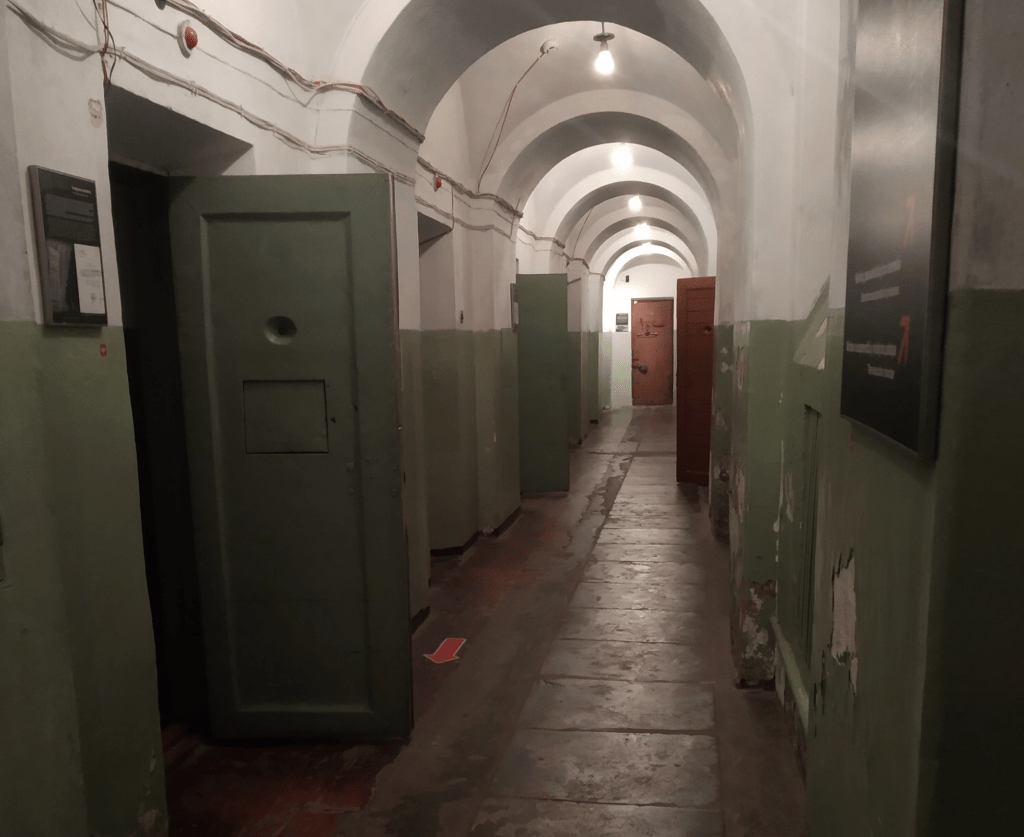
The existing publications on Janina Hosiasson never mentioned a specific date of death. The most common time frame mentioned was April 1942, or simply the spring of 1942. But I was unable to find the original source of this belief: as it often happens with such publications, authors repeat what they saw elsewhere, often without citation, or rely on their own memory of events from decades ago.
I have previously written here about Janina’s relationship with Antoni Pański, her first life partner. As these things go, that version was just a snapshot of my knowledge at the time. Since then, I have accumulated more sources, which of course led to more questions than they answered.
Continue readingContinue readingWe are sleeping for the first time in a prison cell, where throughout the night our legs are hurting. Call this fact f1. Can we raise the degree of belief in the fact that the next night our legs will also hurt? Let us call this future fact f2. (…) Now our question comes down to whether there are any possible causes of f1 such that, if we assume them, f1 does not lower the level of confidence in f2. Suppose for instance that besides w the only possible cause of f1 is (next to some humidity in the cell) rainy weather on the day preceding the night when we were in pain, and the fact that on that day we stood outside for a long time, waiting for bread.
One of my recent academic projects has been to thoroughly read all of Janina Hosiasson’s published works. It is not a trivial task, and I believe that no one has actually done it (recently anyways). First, there are of course language barriers: she wrote and published in four languages. Second, there are issues of time and space: some of her articles happen to be in by now very obscure journals, magazines, and conference proceedings – not available digitally, and in some cases available only in a handful of hard copies. Continue reading
They must have met at university. There were not that many philosophy students after all and not that many women in the hallways yet. And surely not that many beautiful women with an intense, striking gaze. Continue reading
In October 1928, Virginia Woolf delivered two lectures in Cambridge which later became “A Room of One’s Own.” In the essay, she writes about wandering into the university library and being immediately stopped by “a deprecating, silvery, kindly gentleman, who regretted in a low voice as he waved me back that ladies are only admitted to the library if accompanied by a Fellow of the College or furnished with a letter of introduction.” Continue reading
 Marta Sznajder